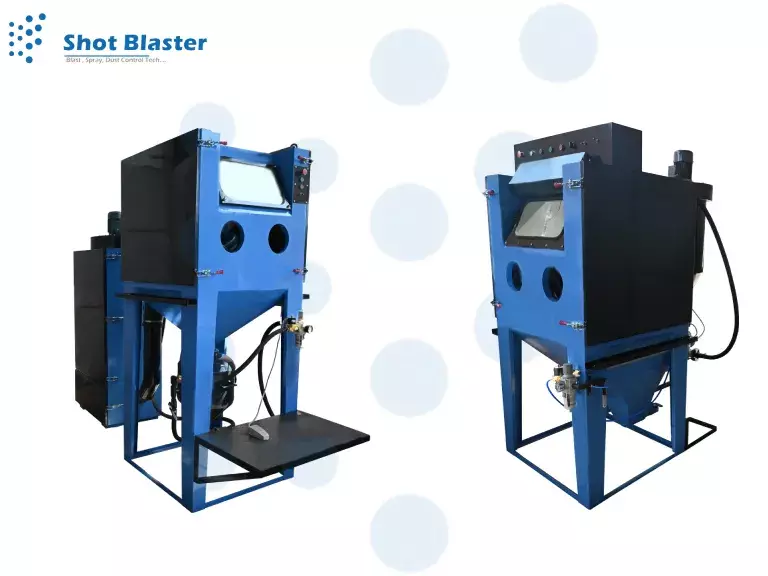
Shot blasting machine is an essential tool for surface preparation in various industries. These machines are designed to blast abrasive materials onto a surface to remove contaminants, rust, and other unwanted substances, leaving a clean, smooth surface for coating or painting. Like any other machine, shot blasting machines require regular maintenance and repair to ensure optimal performance and longevity.
In this article, we will provide an overview of shot blasting machine maintenance and repair. We will discuss the importance of regular maintenance, common maintenance tasks, troubleshooting, and repair.
Importance of Regular Maintenance
Regular maintenance is critical for shot blasting cabinet and machine as it helps to keep the machine running at its best. Neglecting maintenance can lead to reduced performance, costly repairs, and even machine failure. Regular maintenance can prevent these issues, increase the lifespan of the machine, and improve its efficiency.
Common Maintenance Tasks
There are several maintenance tasks that should be performed regularly on shot blasting machines. These include:
- Checking for wear and tear on the machine parts: Shot blasting machines contain various parts that undergo wear and tear over time. Regular inspection of these parts helps to identify signs of wear and tear and replace them before they become a problem.
- Checking and cleaning the dust collector: Dust and debris accumulate in the dust collector over time, reducing its efficiency. Regular cleaning ensures that the dust collector is working at its best.
- Lubricating the machine: Shot blasting machines have several moving parts that require lubrication to prevent friction and wear. Regular lubrication can prevent damage to the machine and ensure optimal performance.
- Checking and adjusting blast pressure: The blast pressure should be checked regularly to ensure it is at the recommended level. Adjustments may be necessary to ensure optimal performance.
- Checking the machine’s electrical components: The electrical components of the machine should be checked regularly for wear and tear or damage. Electrical problems can be dangerous and can lead to machine failure.
Troubleshooting
Despite regular maintenance, shot blasting machines can still experience issues. Some of the most common issues include:
- Reduced blast power: Reduced blast power can be caused by several factors, including low air pressure, a dirty air filter, or a clogged abrasive flow.
- Uneven blast pattern: An uneven blast pattern can be caused by a misaligned nozzle, worn blast wheel blades, or an improperly adjusted blast wheel.
- Abrasive leakage: Abrasive like steel shots, garnet sand and glass bead’s leakage can be caused by a worn or damaged seal, a loose fitting, or a clogged abrasive flow.
Repair
In some cases, shot blasting machines may require repair. Repairs should be carried out by qualified technicians to ensure that the machine is repaired correctly and safely. Some of the most common repairs include:
- Replacing worn or damaged parts: Shot blasting machines have various parts that may wear out or become damaged over time. These parts should be replaced promptly to prevent further damage to the machine.
- Repairing electrical components: Electrical components can become damaged or worn over time. Repairs should be carried out by qualified technicians to ensure that the machine is safe to use.
- Cleaning and replacing filters: Filters should be cleaned and replaced regularly to ensure that the machine is working efficiently and to prevent dust from entering the surrounding environment.
Conclusion
Shot blasting machines are an essential tool for surface preparation in various industries. Regular maintenance is critical for optimal performance and longevity. Common maintenance tasks include checking for wear and tear on machine parts, cleaning the dust collector, lubricating the machine, checking and adjusting blast pressure, and checking the machine’s electrical components. Troubleshooting and repair may be necessary in some cases. It is essential to carry out repairs safely and by qualified technicians. Proper maintenance and repair can extend the lifespan of the machine, improve its efficiency, and prevent costly repairs.